Partnering with VANI on AI for NGO Communications
February 8, 2026
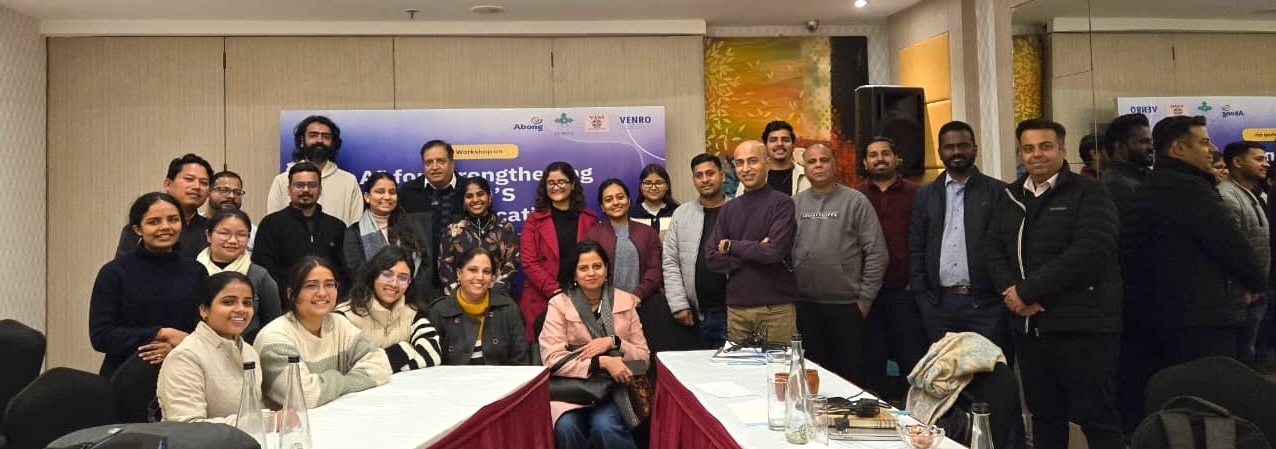
If you are an Indian nonprofit and not a member of VANI, I highly recommend getting in touch with them. Since 1988, VANI has been strengthening the Indian nonprofit sector, from grassroots organisations to national networks, by building capacity, encouraging collaboration, and advocating for the sector as a whole.
So when digiSarathi was selected as the training partner for VANI’s AI for NGO Communications workshop, it was a matter of both pride and responsibility. The participants VANI brought together were deeply invested in impact, asked questions rooted in real, day-to-day work (not abstract curiosity), and clearly cared about doing their communications better. That kind of room demands your best work.
Doing is the best form of learning.
A Hands-On Approach
The workshop was a one-day, in-person engagement in Delhi, and from the outset both VANI and I were clear that this would be a hands-on session. I strongly believe that doing is the best form of learning. Over 20 participants from different NGOs took part, some more experienced with AI than others, but all willing to experiment and learn.
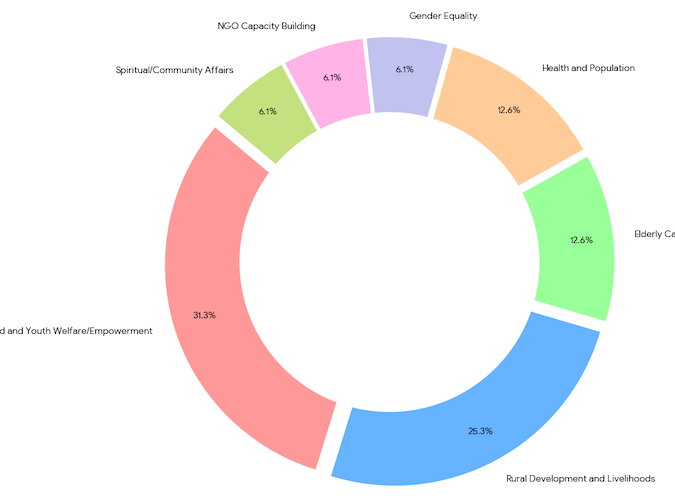
Focus Areas of participants' NGOs
I began the day by demonstrating how AI can be used to quickly understand the diverse focus areas represented in the room. In earlier years, getting to know participants before a workshop would either take hours of preparation or be nearly impossible with larger groups. I showed how this kind of contextual understanding can now be achieved in minutes, allowing organisers to adapt sessions meaningfully and in real time.
Beyond the 'Perfect Prompt'
This naturally led to what many participants were most curious about: the idea of the “correct prompt.” I deliberately avoided the hype around master prompts or one-size-fits-all formulas. There is no single prompt that produces perfect results every time. What matters far more is how one approaches AI: how clearly the problem is framed, how context is built, and how outputs are evaluated. My focus throughout was on helping participants become self-reliant, rather than dependent on templates or tricks.
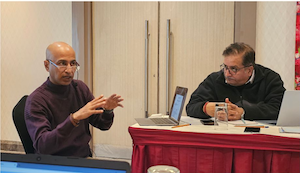
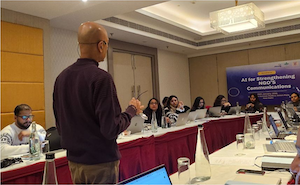
Photo Credit: Ravi Pahuja
As the day progressed, participants explored different AI capabilities and applied them directly to their own organisational realities - several “aha” moments were clearly visible. People could feel the difference between their earlier way of using AI and the approach demonstrated during the workshop. The shift was evident not just in outputs, but in confidence.
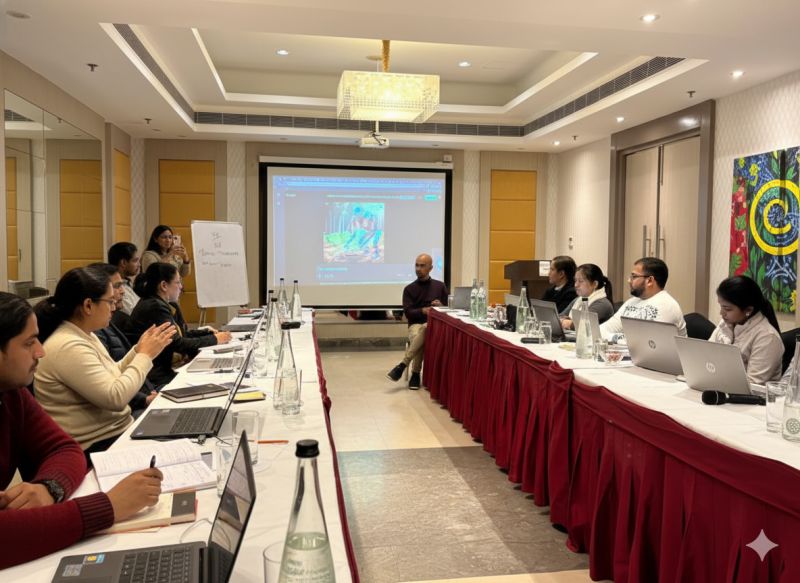
Hands-on session & Discussions. Photo Credit: Aanchal Shukla
Breaking Language Barriers
One theme I emphasised strongly was language and national reach. I shared my own experience of running a newsletter that reaches NGOs across India. Before AI, communicating meaningfully beyond a few languages was simply not feasible for a small team. Today, AI makes it possible to bridge that gap and engage across regions more inclusively, without losing intent or authenticity.
From Practice to Output
For the capstone exercise, participants created a graphical social media post for their own NGOs. We reviewed these together in a group discussion. I stressed that while generating content with AI is relatively easy, evaluating what AI produces is far more important. Good communication still requires judgment, clarity, and a basic understanding of design and messaging, skills that AI can support but not replace.
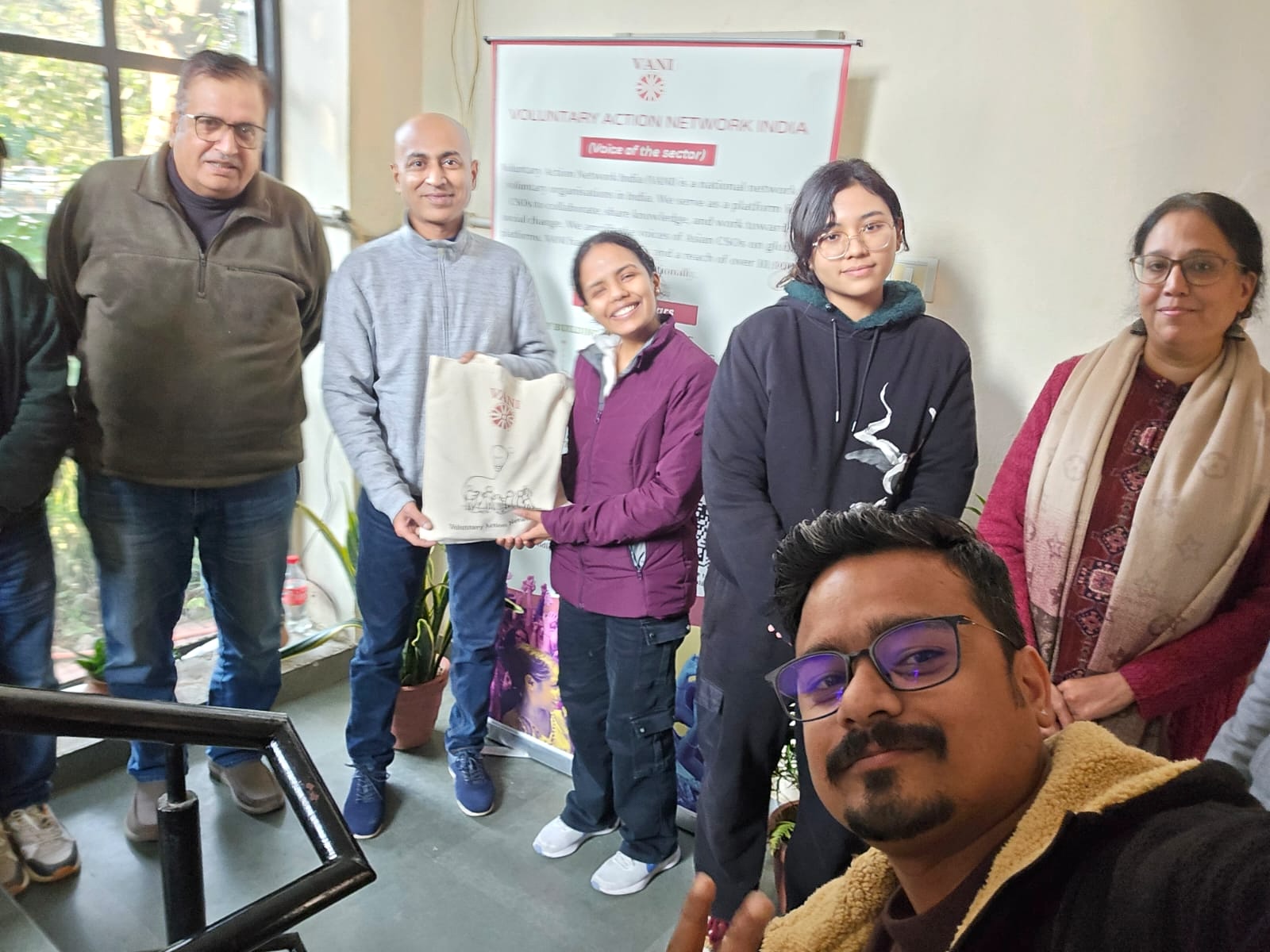
Souvenir from VANI
Overall, the workshop was a rewarding experience. I was genuinely glad to be part of this engagement and to contribute to how the nonprofit sector thinks about and adopts AI responsibly.
Author’s Note
My work with nonprofits over the last 15+ years has taught me that technology only creates value when it is grounded in context, judgment, and real constraints. AI is no different.
In my trainings and advisory work, I intentionally focus less on tools and tricks, and more on helping teams think clearly about their communication goals, audiences, and quality standards. The aim is not to “use AI more,” but to use it well, in ways that strengthen credibility, reach, and impact.
Want similar training for your organization? Contact digiSarathi to design a workshop that fits your team's needs.